
Understanding the brain and trauma:
Why do Trauma memories feel so different?
Most everyday memories are stored by the brain as events that happened in the past. We can remember them, think about them, and learn from them whilst knowing they are over. Trauma memories are different.
When something overwhelming or frightening happens, the brain's survival systems take priority. The focus becomes staying safe rather than processing information in the usual way. As a result, some traumatic memories can remain stored in a way that feels emotionally and physically "unfinished."
This is why people often say:
• "It feels like it is happening all over again."
• "I know I'm safe, but my body doesn't believe it."
• "Certain situations trigger a reaction before I've even had time to think."
Key Brain Areas Involved in Trauma
🚨 The Amygdala:
The Alarm System
The amygdala acts like the brain's smoke alarm. Its job is to:
• Detect danger
• Trigger the fight, flight, freeze, or fawn response
• Release stress hormones such as adrenaline and cortisol
During trauma, the amygdala becomes highly activated and may remain sensitive long after the event has finished. This can lead to:
• Hypervigilance
• Anxiety
• Startle responses
• Feeling constantly on edge
• Strong emotional reactions to triggers
• Sense the danger is happening ‘now’
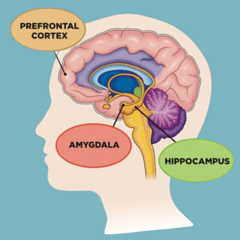
🕰️ The Hippocampus:
The Time Keeper
The hippocampus helps organise memories. Its job is to:
Store experiences in time and place
Distinguish between past and present
Provide context to memories
During trauma, the hippocampus may struggle to process information properly. As a result:
Memories can feel fragmented
The past can feel like the present
Triggers can seem more threatening than they really are
💓 The Body and Nervous System
Trauma doesn't only affect memories. The nervous system learns to stay alert for danger. This can result in:
• Muscle tension
• Sleep difficulties
• Fatigue
• Digestive symptoms
• Feeling emotionally overwhelmed or numb
The body continues responding as if protection is needed.
🧠 The Prefrontal Cortex:
The Thinking Brain
The prefrontal cortex is responsible for:
Logical thinking
Decision-making
Perspective-taking
Rational evaluation of danger
When the threat system is highly activated, the prefrontal cortex becomes less accessible. This is why, during anxiety or trauma responses:
Logic may not help
Reasoning feels difficult
You may know you're safe but still feel unsafe
How Trauma Therapy Helps
The goal of trauma therapy is not to erase memories. The goal is to help the brain process and organise traumatic experiences so they can be recognised as events that happened in the past and reduce the sensory components of the memory.
Therapies such as EMDR and Trauma-Focused CBT help:
✅ Reduce the amygdala's alarm response
✅ Help the hippocampus place memories in the past
✅ Bring the prefrontal cortex back online
✅ Reduce the body's need to stay in survival mode
Over time, memories often become:
• Less distressing
• Less vivid
• Easier to think about
• Less likely to trigger a strong threat response
Key Takeaway
Trauma therapy helps the brain update old survival information so that the body no longer needs to respond as though the danger is happening in the present.